Interview #1: Michelle Pham
EGSA has interviewed one of our graduate students, Michelle Pham from the Dr. Gardiner Lab, who was recently selected as a State Presidential Postdoctoral Scholar Program Fellow and received the Community Engaged Graduate Student Award. First, we would like to extend our heartfelt congratulations!
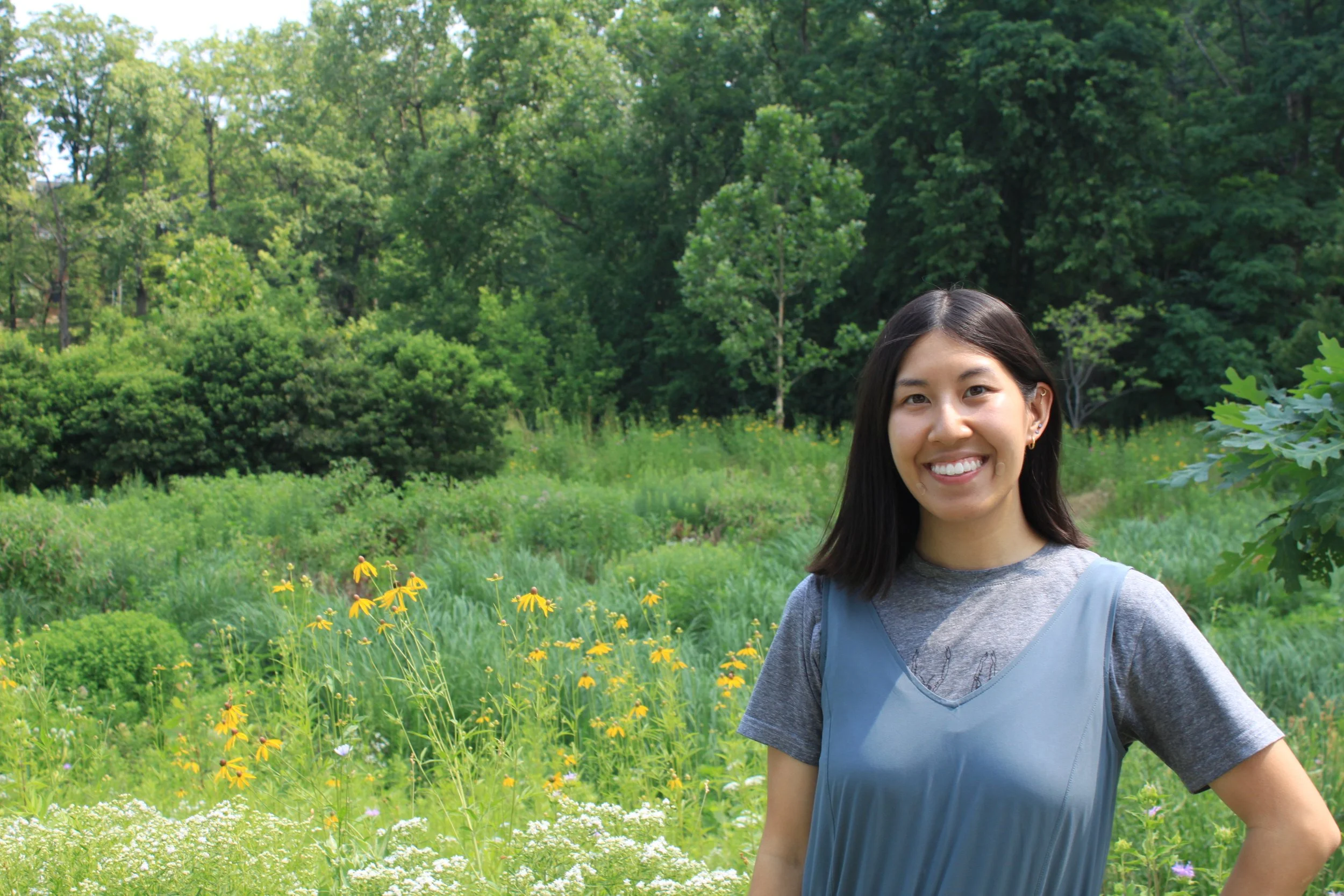
Michelle Pham
Could you briefly introduce yourself?
I am a 6th-year PhD candidate in the Gardiner Urban Insect Ecology Lab and the Environmental Sciences Graduate Program. My dissertation research focuses on how vacant land in legacy (post-industrial) cities like Cleveland can be managed to support wild bee conservation and neighborhood beautification. I integrate methods from ecology, community science, and entomology in my work, taking an interdisciplinary approach to understand these urban ecosystems holistically.
It sounds like a very exciting field! Could you describe your research in details?
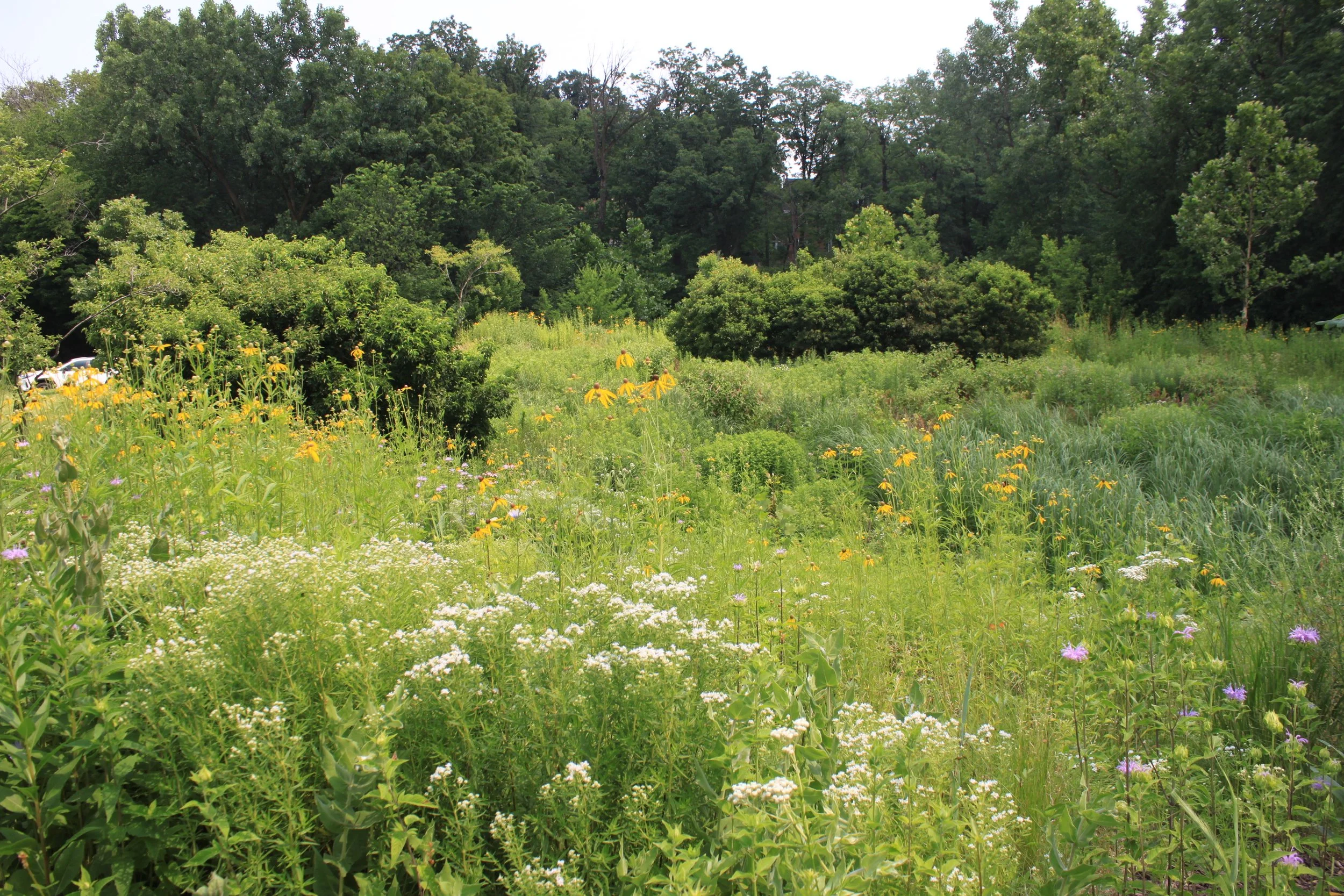
In my research, I work with grassroots organizations, community leaders, and municipal agencies who are interested in maximizing the benefits of urban greening for people and pollinators. I have worked with the Northeast Ohio Regional Sewer District to study rain gardens they have planted to help manage stormwater, and I've also worked with Noble Neighbors, a community group on the east side of Cleveland, to establish a citywide study of front yard pollinator gardens and their value for wild bees.
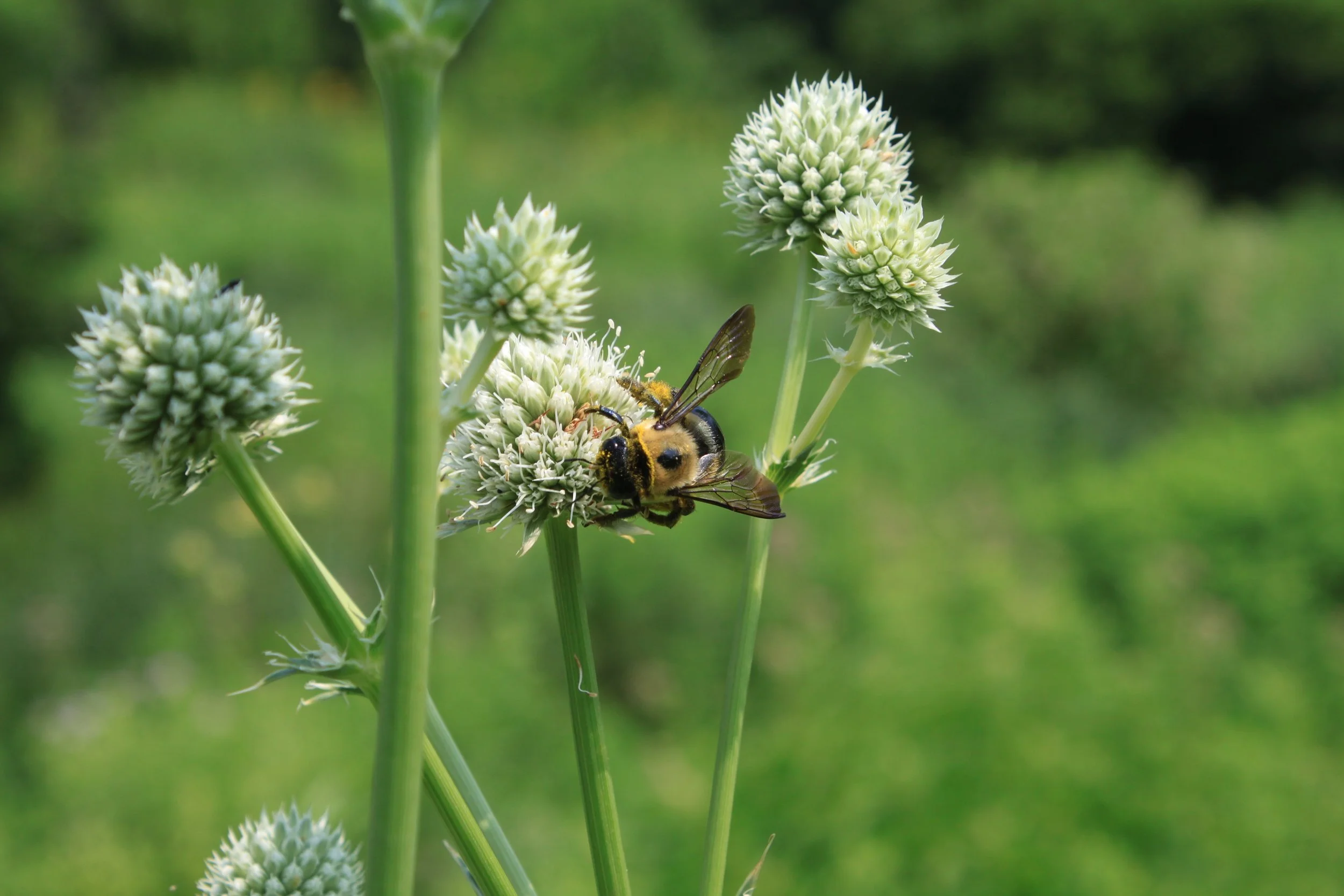
A key finding of my dissertation research is that habitat establishment is an important factor to consider in any urban greening project, especially as it relates to wild bees. With proper management and care, even small native wildflower plantings in urban neighborhoods can greatly improve vacant land as bee habitat. In my work with the sewer district, I've also found that rain gardens support incredibly species rich and diverse bee communities, including threatened bumble bee species and rarer, specialist species. This is interesting, given that these habitats are not intended to support pollinator conservation.
What motivated you to pursue this research area?
For a time, I was an undergraduate student in UCLA School of Architecture and Urban Design, interested in integrating sustainability and the built environment. This changed when I became a researcher in the UCLA Center for Neighborhood Knowledge, studying urban green space disparities within inner city Los Angeles. I became disheartened by the lack of useable parks and became interested in how we can improve these green spaces for wildlife and people. The following summer, I completed an NSF Research Experiences for Undergraduates program in Flint, Michigan at Kettering University, working with Dr. Jim Cohen on the pollen morphology of borage flowers. At the end of that summer, I listened to an amazing talk by Dr. Rebecca Tonietto which synergized different aspects of my research training, touching on the need to reinvest in post-industrial cities like Detroit and Flint, supporting community-engaged pollinator research, and aligning people and nature through greening. This is what sparked my interest in urban ecology.
It sounds like your research area is a perfect fit for you. Have you had the chance to engage in outreach, collaborative, or extension work through your project? If so, we would love to hear more about it!
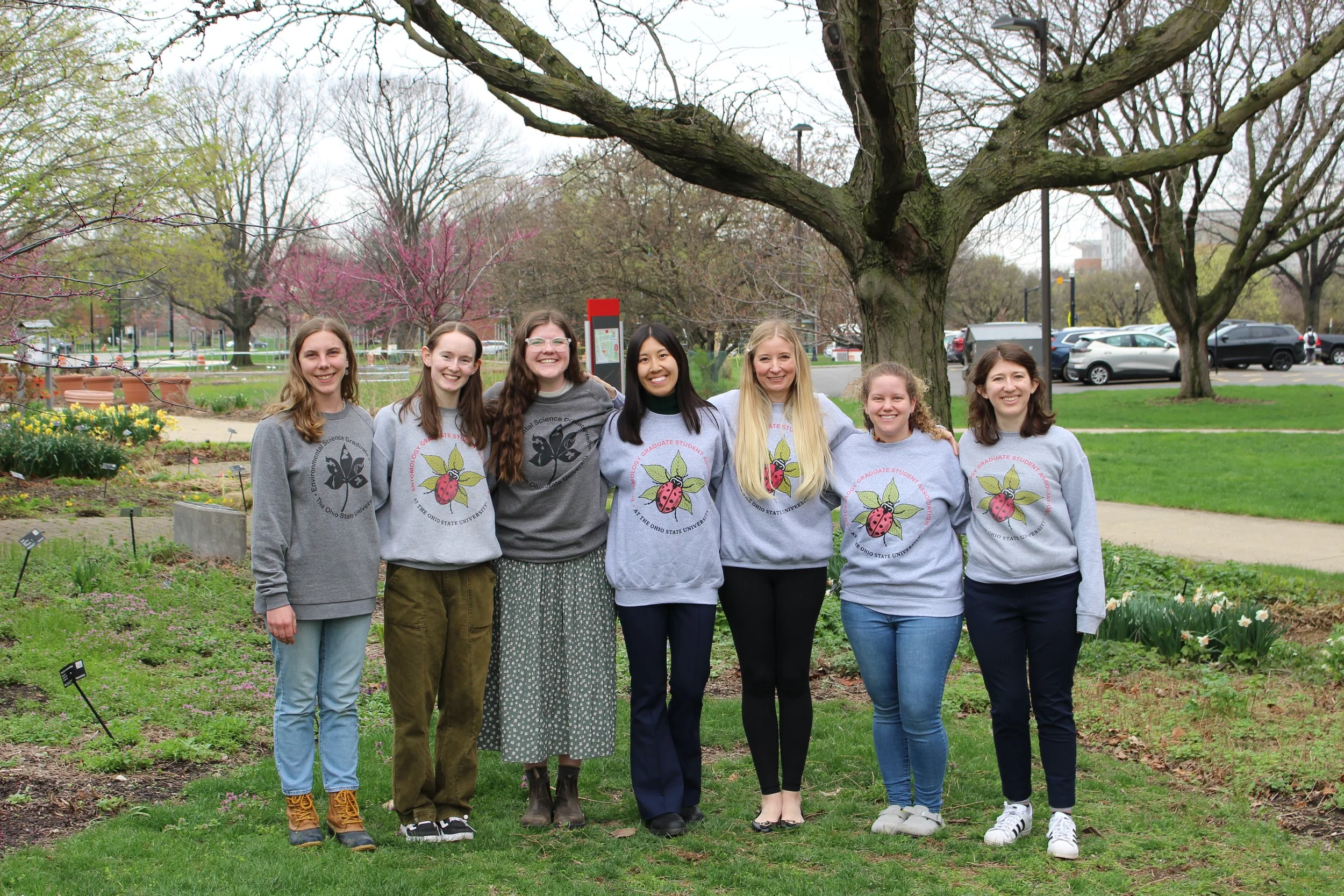
Yes! During my time as a PhD student, I participated in Insect Night Walk and the COSI Big Science Celebration thanks to the Entomology Graduate Student Association (EGSA) which provides excellent opportunities for students to get experience communicating insect science to the public. I've collaborated with the United Titanium Bug Zoo to deliver outreach programming at the East Cleveland Public Libraries and Heights Libraries. Dr. Ellen Klinger and I also led a workshop for research scientists at the Greenacres Foundation on insect identification. Lastly, my dissertation research involved a substantial amount of transdisciplinary collaboration with landscape architects, community leaders, and nonprofit organizations.
You have done such meaningful work! We are curious if this is a direction you hope to continue exploring in your future research.
I would like to continue expanding my expertise in community-engaged research methods. I am very interested in the coproduction of knowledge with local communities. That is, working with people not just to collect data, but to design research questions and address their concerns through ecology and insect science. I would also like to expand my experience with transdisciplinary science and confront frontiers where I feel slightly uncomfortable but excited to understand better (e.g., urban planning, social science).
The State Presidential Postdoctoral Scholar Program Fellowship
Could you briefly explain the State Presidential Postdoctoral Scholar Program Fellowship for those who may not be familiar with it?
The Ohio State President's Postdoctoral Scholarship Program is intended to support postdoctoral trainees who will become leaders in their respective fields. This scholarship spans disciplines, awarding support to cohorts of about ten students per year since 2018. It provides salary support, professional development opportunities, and funds for research travel and supplies to support postdoctoral scholars as they embark on this next step in their academic journey.
What inspired you to apply for this fellowship, and what advice would you give to others considering applying?
Dr. Jamie Strange has superior expertise in bee conservation and species recovery, as well as the mentorship style I am looking for in a postdoctoral adviser. Within that, he has experience mentoring postdocs and can offer the support and guidance I need as an early career researcher. I have also felt so incredibly supported by the Department of Entomology and wanted more time to finish side projects and scholarly pursuits within the department before moving on.
For students who are considering applying, I would recommend identifying areas or skills where you are weak and being upfront about those weaknesses. The postdoctoral position is transitory by design, and during this time you want to focus on how you can develop into a more well-rounded scientist by addressing these weaknesses.
What do you think contributed most to your success in receiving this fellowship?
It takes a village to be successful. My success is the legacy of those before me and many mentors who have invested their time, energy, and resources into making me a better scientist and person. Yes, I pushed myself hard during my PhD, but I think that is the case for the majority of graduate students. No one person's success is solely their own. That being said, I would say a critical component of my success was having people that pushed me to grow and challenge myself. It's also important to have people who do not tell you what to think, but how to think. Finding mentors and friends who believe in you is key.
What are your plans or research goals for your postdoctoral period?
I would like to become more familiar with lab-based methods for assessing bee health. This is a concept which encompasses population-level, community-level, and individual-level metrics of how well bees are doing in the environment. Most of my dissertation work has focused on bee health through the lens of community-level diversity. I am interested in delving more into bee pathogen dynamics and how that can be used to assess bee health. The Strange Lab, and the Rothenbuhler Bee Lab as a whole, present great opportunities for me to learn from others and develop in this research area. In tandem, I would like to develop my pedagogical skills and get more experience creating lesson plans, teaching students, and working in the classroom. I am excited to grow in these ways!
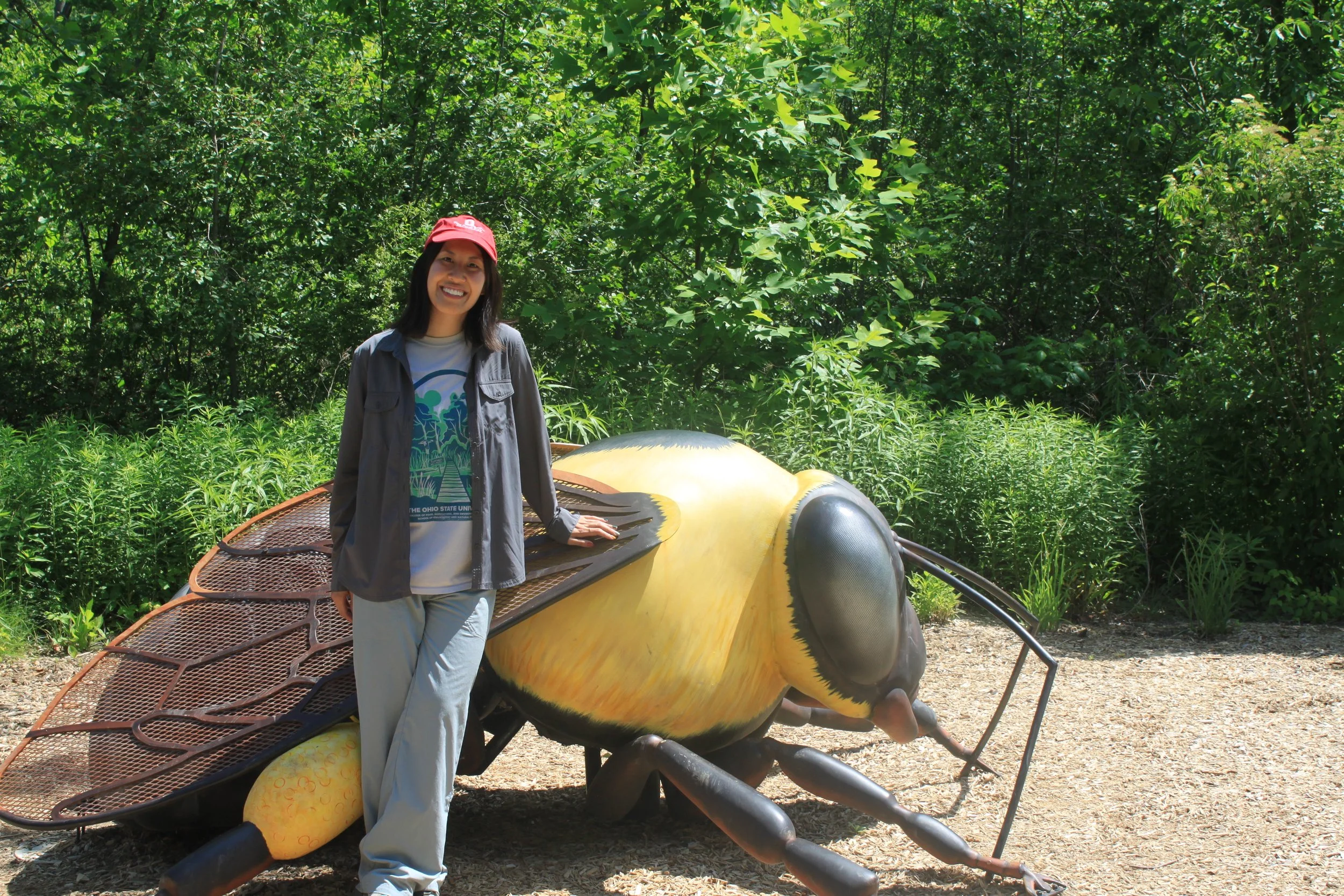
We would like to sincerely thank Michelle Pham for taking the time to participate in this interview, as well as for sharing such meaningful advice. EGSA OSU wishes Michelle all the best and continued success in her future endeavors!
Interviewer/Editor: Dahee Ahn