Interview #4: Luke Hearon
EGSA recently interviewed one of our graduate students, Luke Hearon, from the Dr. Johnson Lab, who recently received a grant from the North American Pollinator Protection Campaign (NAPPC), Pollinator Partnership.
First, we would like to congratulate Luke on this achievement! In our interview, we discussed his research, the grant he received, and his future career goals.
About Luke and His Research
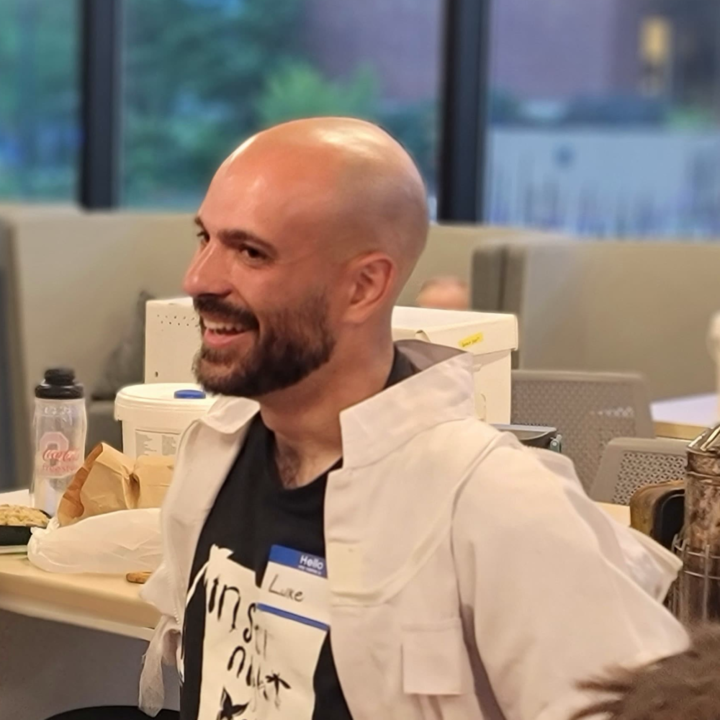
Could you briefly introduce yourself?
I'm Luke Hearon, a doctoral candidate in Dr. Reed Johnson's lab. My work develops and deploys bioacoustic methods for passive monitoring of pollinator activity. In other words, I teach computers to listen for bees. To this end, I'm building buzzdetect, a free and open source application for using the models I train to detect bees in audio. I'm using this technology to investigate the intersection of bee health and agriculture. Agriculture impacts pollinators both negatively through pesticide inputs and positively through providing flowering resources (either via pollinator plantings or through the crop itself, if it's a flowering crop). Pollinators affect agriculture through the pollination services they provide.
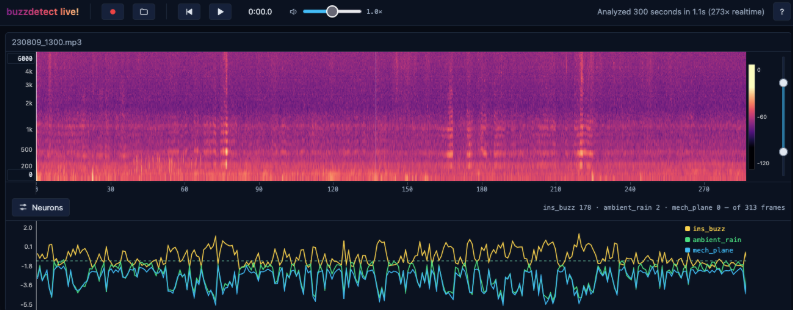
buzzdetect (credit: https://lukehearon.com/blog/2026/buzzdetect-live/)
That’s fascinating! I love the idea of using the deep-learning models to monitor bee activity, especially as a way to better understand the relationship between agriculture and pollinator health. Could you tell us more about your research and the key questions or challenges you’re exploring?
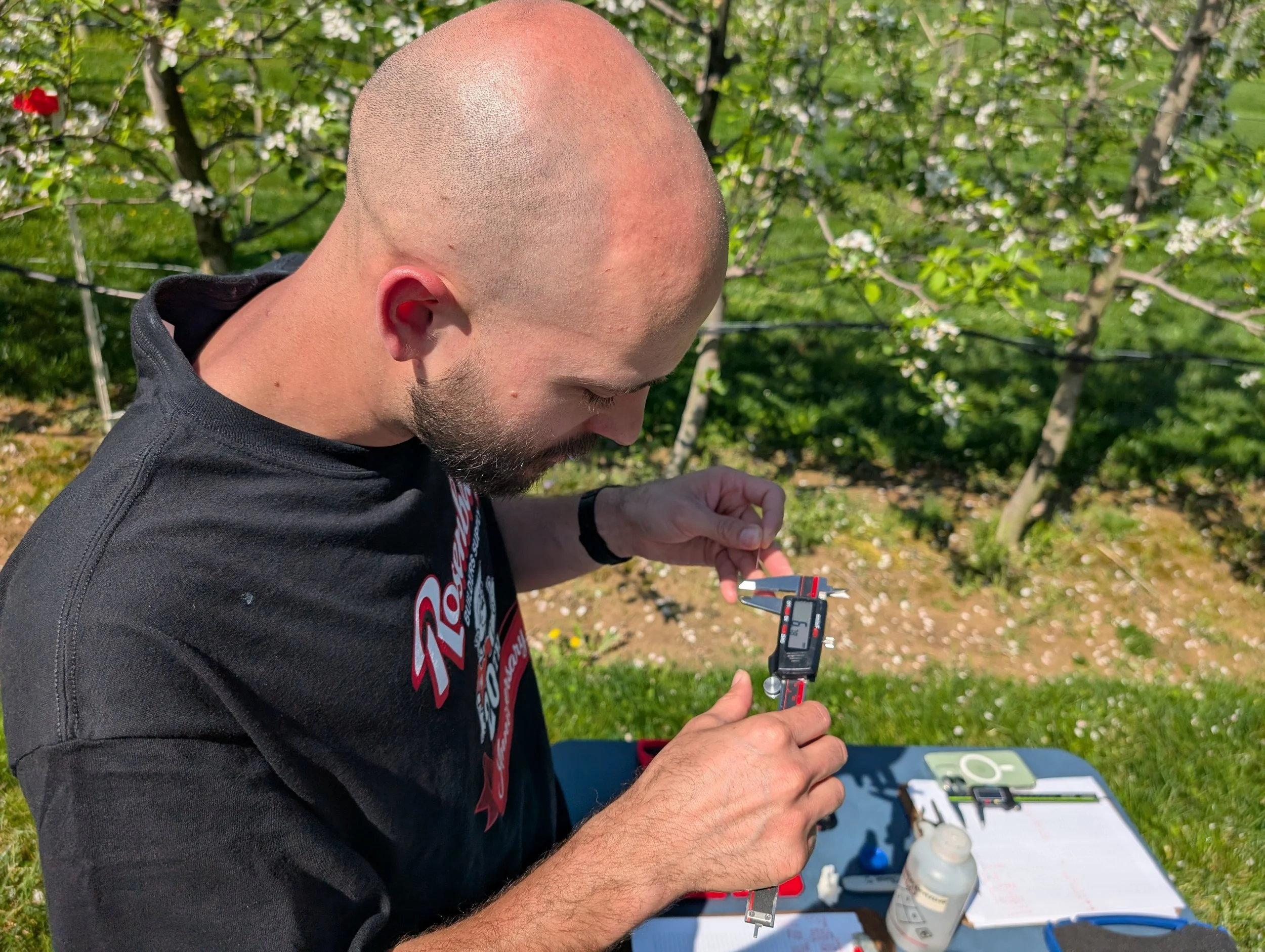
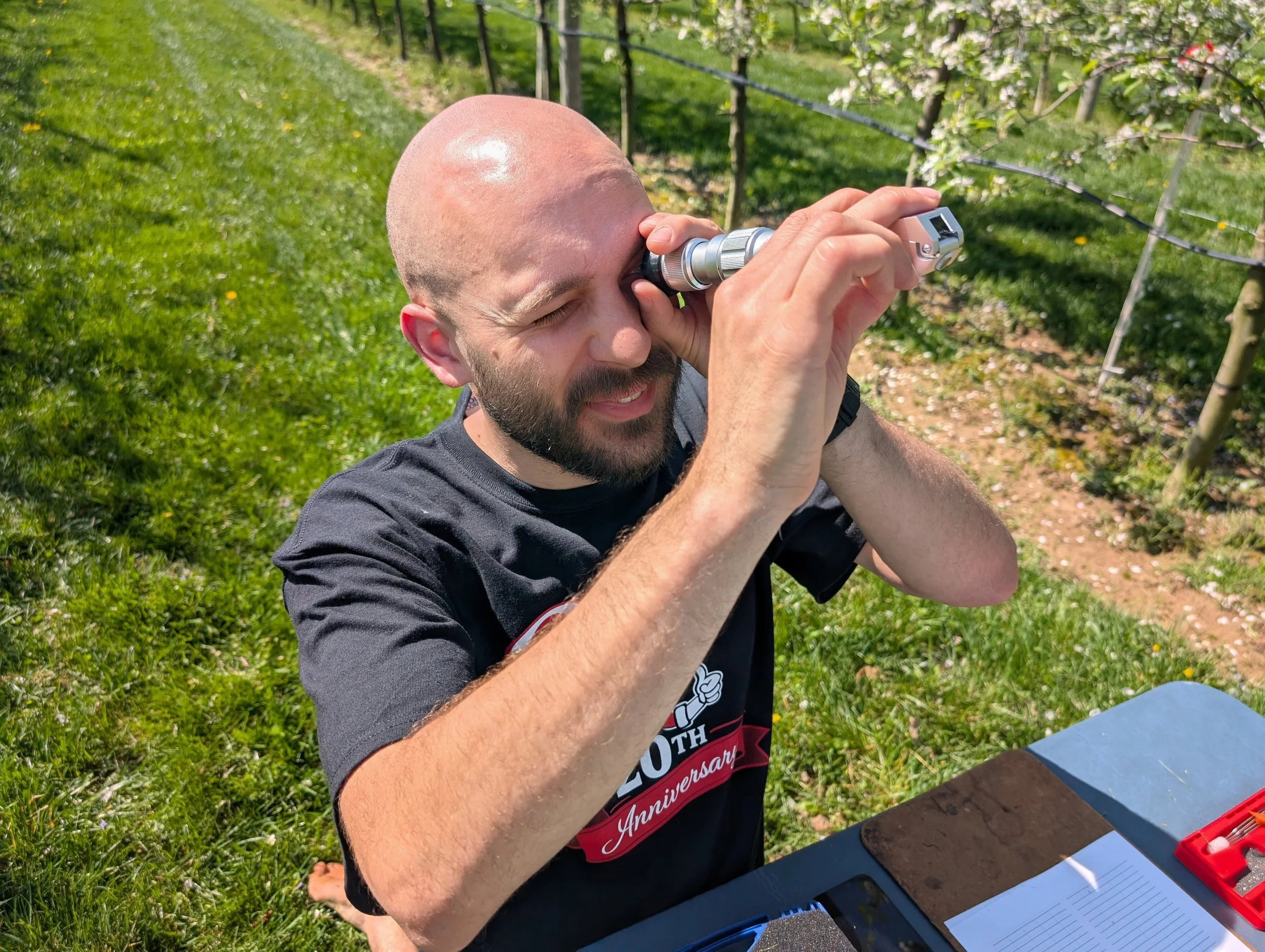
The bioacoustic work has taken me in a lot of different directions, but one of my core research questions is: what are the patterns of pollinator activity in different crops across the day? Previous work from myself and others has demonstrated that different plants experience very different timing of foraging across the course of the day. I'm currently running an experiment trying to determine why the timing differs so greatly by measuring the change in floral resources (pollen abundance, nectar volume, nectar sugar concentration) across the course of the day. If we can determine when bees are active and why, it may allow us to time pesticide applications to avoid non-target impacts or to plant pollinator habitat that draws in pollinators when the focal crop is receptive to pollination. I'm still analyzing the data, but I can already tell that the crops (blueberry, pumpkin, zucchini, soybean, and apple) have very different patterns from one another.
It’s exciting to see how differently pollinators behave across crops! What first sparked your interest in this field, and what continues to motivate you?
Funny enough, bioacoustics wasn't my initial research direction. It was a project handed to me when I was still a tech in the Bee Lab and it just kind of took off. I'm utterly obsessed with trying to improve the buzzdetect models (I have a model training on my laptop while I write this) and watching the project go from, "oh hey it kinda worked!" to tearing through years' worth of audio on a cheap MacBook is what keeps me hooked. The passive monitoring method lets us see into bee behavior at a scale that was unimaginable just a short while ago.
It’s amazing how a project that started unexpectedly has grown into something with so much potential! Do you see yourself continuing in this field, and how would you like to see your research evolve in the future?
I'm not sure I'll be staying in academia after graduation, but I really hope I can keep exploring insect bioacoustics. I think we've barely started to scratch the surface of what's possible. Future directions for buzzdetect will mostly be about getting more information from the audio - can we identify what insects are making the buzz? Can we distinguish pollination events from the buzzes of insects passing by? Can we map the number of buzzes detected to a density of pollinators in the area? Any one of these would make for a fruitful few years of research!
The North American Pollinator Protection Campaign Grant, Pollinator Partnership
Congratulations again on receiving the grant! For those who may not be familiar with the organization, could you briefly introduce the Pollinator Partnership and tell us a little about its grant programs?
The Pollinator Partnership is a non-profit organization that seeks to support the health of pollinators. One of their initiatives is the North American Pollinator Protection Campaign (NAPPC), which funds research projects aimed at pollinator health.
Could you share some advice for others who may be interested in applying for a grant in the future?
Just take a shot! The target area of my research wasn't even one of the ones named in the request for proposals, but I thought there was a real connection to the funder's overall goals. So, I spent some time reading the funder's website and previously funded research and considered how my work could realistically address those needs. Turns out, this was the grant that I secured after the same proposal being declined by two previous funders, where I really thought it had a much better chance. You miss 100% of the grants you don't write.
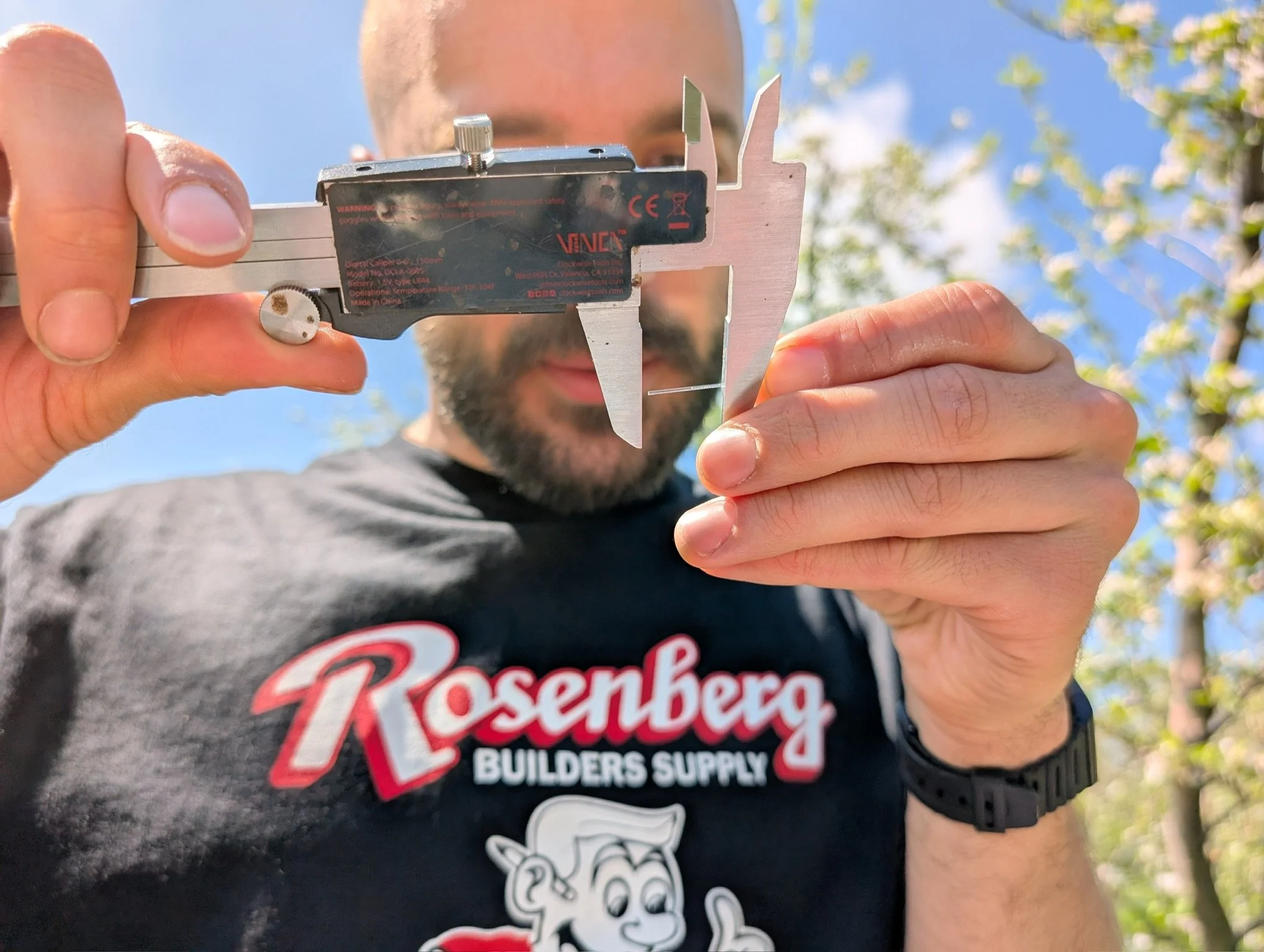
Could you tell us a little about the project supported by this grant? What aspects of the project are you most excited about, and what are you looking forward to as the research progresses?
One of the greatest benefits of passive acoustic monitoring is the ridiculous degree of temporal resolution it affords. You can monitor pollinator activity on literally a second-by-second basis. As I mentioned before, I'm doing a lot of research looking at patterns of foraging within the span of a day, and that's largely because this research avenue is very difficult using traditional methods, but has been opened up by automated monitoring. While the daily timing of foraging is difficult to study, it's by no means unimportant. For example, a pesticide applicator may want to adjust spray to avoid pollinator activity (indeed, this is required when applying some bee-toxic pesticides). However, our understanding of the timing and drivers of daily pollination is incomplete. I proposed a study to NAPPC that investigates the daily pattern of pollination in a number of different crops and measures floral resources (nectar sugar, nectar volume, standing crop of pollen) across the same time frame. The goal is to correlate floral rewards with pollinator activity so we can better predict when beneficial insects are in the field and make informed decisions about when to apply pesticides. Analysis is ongoing, but preliminary results indicate that foraging can be surprisingly decoupled from floral rewards. While I expected the bees to all be gone once the nectar dried up, I'm finding that bees can be active in the crop fields for hours after the flowers are depleted! Already we can see that our assumptions about when to spray may be incorrect.
Looking ahead, what kind of impact do you hope to make through your work? Are there any particular career paths or sectors that you’re especially interested in pursuing?
One of the things that I'm proud of with buzzdetect is the low barrier to entry. The application and models are free and open source and the cost of acoustic recorders can be quite low (you could even use your phone). I think there are many impactful ways to use buzzdetect in citizen science or in education, where non-experts can get the chance to interact with the same powerful tools that we're using in our large-scale studies. That's not always the case in science - it's a real challenge to bring an electron microscope into a grade school! I hope this same openness is reflected in my career. I want to do work that's grounded in real practice and benefits real people.
We really appreciate your time to speak with us and share your fascinating research, Luke!
Follow us on Instagram and stay connected!
Interviewer/Editor: Dahee Ahn